Punyawati, the ancient name for present-day Panauti in the Kavre district of Nepal, is one of the country’s oldest towns, with origins tracing back to the first century AD. Situated about 32 kilometers southeast of Kathmandu, it is celebrated for its natural beauty, cultural diversity, religious harmony, and profound historical importance.
In ancient times, this sacred place was known as Palati. In the Newa language, Pala means “step” and ti means “place,” together signifying the “Place to Step.” According to legend, during the Malla period, the people of Kathmandu and Roshi valleys believed that stepping onto this holy land would lead to salvation. Inspired by this faith, the Malla king named the site Palati to encourage devotees to set foot here and attain spiritual liberation.
Sacred Geography
The town lies at the confluence of the Roshi and Punyamati rivers. Tradition holds that a third, invisible river — Lilawati — also joins here, forming a Triveni Sangam (meeting of three rivers). This mystical phenomenon elevates the site’s sanctity, earning it names such as Shachitirtha, Triveni Kshetra, and Uttar Prayagtirtha.
Pilgrimage and Temples
Punyawati has long been honored as a sacred pilgrimage destination. Devotees from Nepal and India journey here to pay homage to Indreshwar Mahadev and other holy shrines. The town itself is believed to rest upon a vast single rock, said to shield it from earthquakes. Mythology attributes this protection to Serpent King Basuki, whose coiled body is thought to support the entire settlement.
In this divine land of Panauti, the Makar Mela is celebrated every twelve years, lasting throughout the month of Magh. Pilgrims arrive not only from Nepal but also from Prayag in northern India. The main site of the fair is Trivenighat in Panauti. According to religious belief, bathing at this sacred confluence and offering its waters to Gorakhnath — who resides northward at Kunjgiri — bestows immense spiritual merit.
Historical Legacy
The recorded history of Panauti dates back to the era of the Lichchhavi rulers (2nd–8th centuries CE). Its compact area hosts a remarkable concentration of 40 temples, monuments, and cultural landmarks, making it a rare and invaluable heritage site.
Spiritual Heritage
It is believed that Guru Gorakhnath (Gorakshanatha), the revered Hindu yogi and founder of the Kanphata yogis, meditated in this sacred land. The presence of the Gorakhnath Temple on Gorakhnath Hill (2,000 ft) in Panauti stands as testimony to this tradition. According to legend, Guru Gorakhnath entered into Anterdhyan—a mystical disappearance into the divine—on this hill, leaving behind a legacy of spiritual power and devotion. Bhagwan Shree Sanjay Sai Baba is said to belong to the Gorakhnath lineage.
Many saints are also believed to have meditated in this sacred land, further deepening its spiritual aura.
The Bhaleshwor Mahadev Temple in Panauti holds immense significance. It is regarded as the sacred place where the forehead of Satidevi fell when Lord Shiva wandered across the universe carrying her lifeless body. Satidevi had sacrificed her life after her father, Dakshaprajapati, failed to invite Lord Shiva to the yagna he organized – an act she considered a grave disrespect to her husband.
Similarly, it is believed that Lord Ram and Mata Sita passed through the jungles of Panauti during their 14-year exile (banwas). The shrine known as Sita Paila, located within the Bhaleshwor Temple complex, stands as a testament to this belief.
In essence, Punyawati Kshetra is not merely a town but a living tapestry of history, mythology, and spirituality—a place where rivers, rocks, temples, and legends converge to create a sanctuary of peace and devotion.
Why Bhagawan Shree Sanjay Sai Baba Chose This Sacred Place
Avatars always choose a particular land to expand their divine mission. A place sanctified by the meditation of saints for ages becomes spiritually charged — its soil transforms into tapobhumi, a land of penance and divine vibration. When saints or avatars attain samadhi there, the divine energy multiplies, sanctifying the land for generations.
Rivers too become sacred when touched by yogis and avatars. It is said that Yamuna Mata performed tapas for years to have Lord Vishnu’s darshan. Lord Vishnu fulfilled her wish by incarnating as Lord Krishna. Today, the Yamuna is revered as one of the holiest rivers after the Ganga. Likewise, the Chitravati and Godavari rivers are sung in bhajans for their sanctity.
At the beginning of His divine mission, Bhagawan Shree Sanjay Sai Baba foretold that a great ashram would arise in Punyawati Kshetra. Years later, a spiritual couple — Ambir KC and his spouse Manju KC — began visiting the ashram. The KC family’s ancestral land happened to be in Punyawati Kshetra.
In July 2006, Swami materialized a sweet laddu from the waters of the Roshi River and offered it to a devotee from New Zealand, Mr. Mark Anand [Honeysuckle and Laddus: My first meeting with Sanjay Sai Baba by Mark Anand – Adhyatma Margadarshika, Magh, 2066]. Inspired by this divine event, Ambir KC expressed his wish to donate land for the future ashram. With Swami’s grace, his family joyfully agreed, and Deb Kumari KC, mother of Ambir KC, offered 25 ropanis of land to the Shree Sanjay Sai Sewa Organization.
After the land was entrusted to the Organization, a series of sacred pujas were performed. During one visit, Swami created a Hiranyagarbha Lingam from the soil of the jungle — the very land of Punyawati Sai Dham (International Spiritual Centre, Punyawati) donated by the KC family.
At the first Bhoomi Puja, a Shivalinga miraculously appeared from the earth. The first Rudri Puja was performed on this Swayambhu Shivalinga (self-manifested lingam), which was later covered after worship. Years later, when the site was excavated for temple construction, the same lingam reappeared. This Shivlingam was consecrated in the Naaga Temple, alongside Naaga Devta.
In another puja, a large stone was worshipped as the guardian of the area. Today, that same stone is revered as Kshetrapal Bhairava, the protector of the sacred land.
In the future, the Roshi River will gain even greater reverence once the ashram begins its full operation. The land, forest, birds, and animals will all be blessed. Punyawati is indeed a land of austerity — destined to become a Global Spiritual Centre for seekers and devotees worldwide.
Even a small stone in this sacred place is a Shivalinga; no pran-pratishtha is needed. Just as stones from the Narmada and Kaligandaki rivers are naturally worshipped, the stones of Punyawati carry divine energy.
When an Avatar steps onto a land, even its soil and stones become sanctified. Vastubidhas (experts in sacred architecture) have testified that the area’s energy has already intensified. Once the ashram is fully functional, Swami’s divine presence will multiply this energy, transforming the entire region.
Bhagawan Shree Sanjay Sai Baba also declared that following his samadhi, His sacred body will be interred at this holy site. Even after his samadhi, He will continue to inspire and uplift devotees through Vedic knowledge, fostering spiritual enlightenment and liberation for countless follower. This sacred dham will serve as a beacon, drawing devotees from across the world for their spiritual journey.
Today, many gods and goddesses have already found their place within the ashram premises. In the coming years, the spiritual vibration of Punyawati Sai Dham will continue to rise, blessing all who come in contact with it.
Shree Sanjay Sai International Spiritual Centre — Punyawati Sai Dham
On the auspicious occasion of Bhagwan Shree Sathya Sai Baba’s 98th birth anniversary, 23rd November 2023, the foundation of Punyawati Sai Dham was laid by the divine hands of Bhagwan Shree Sanjay Sai Baba. National and international devotees participated in this sacred event, which was graced by soulful bhajans and Swami’s divine discourse.
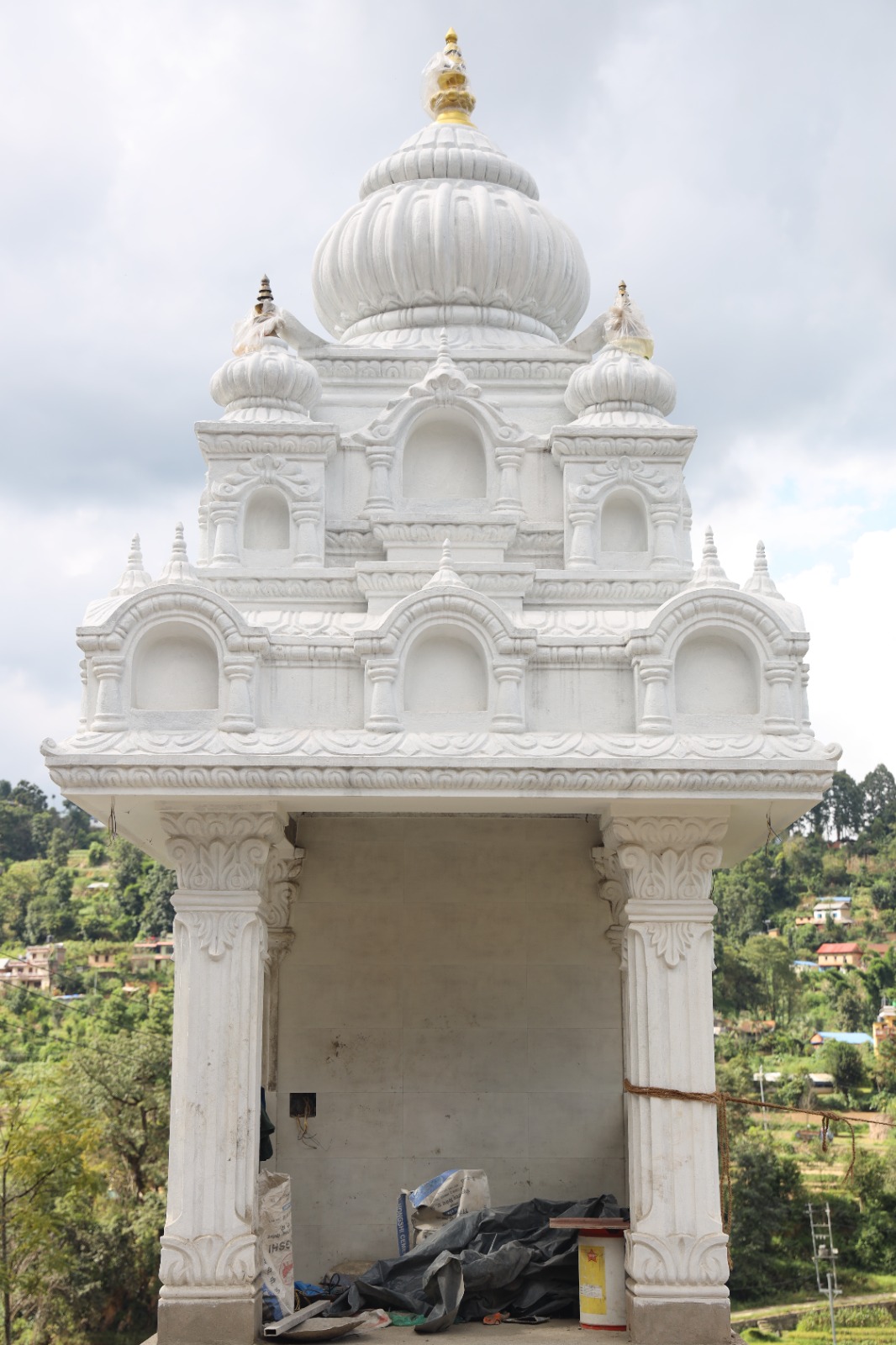
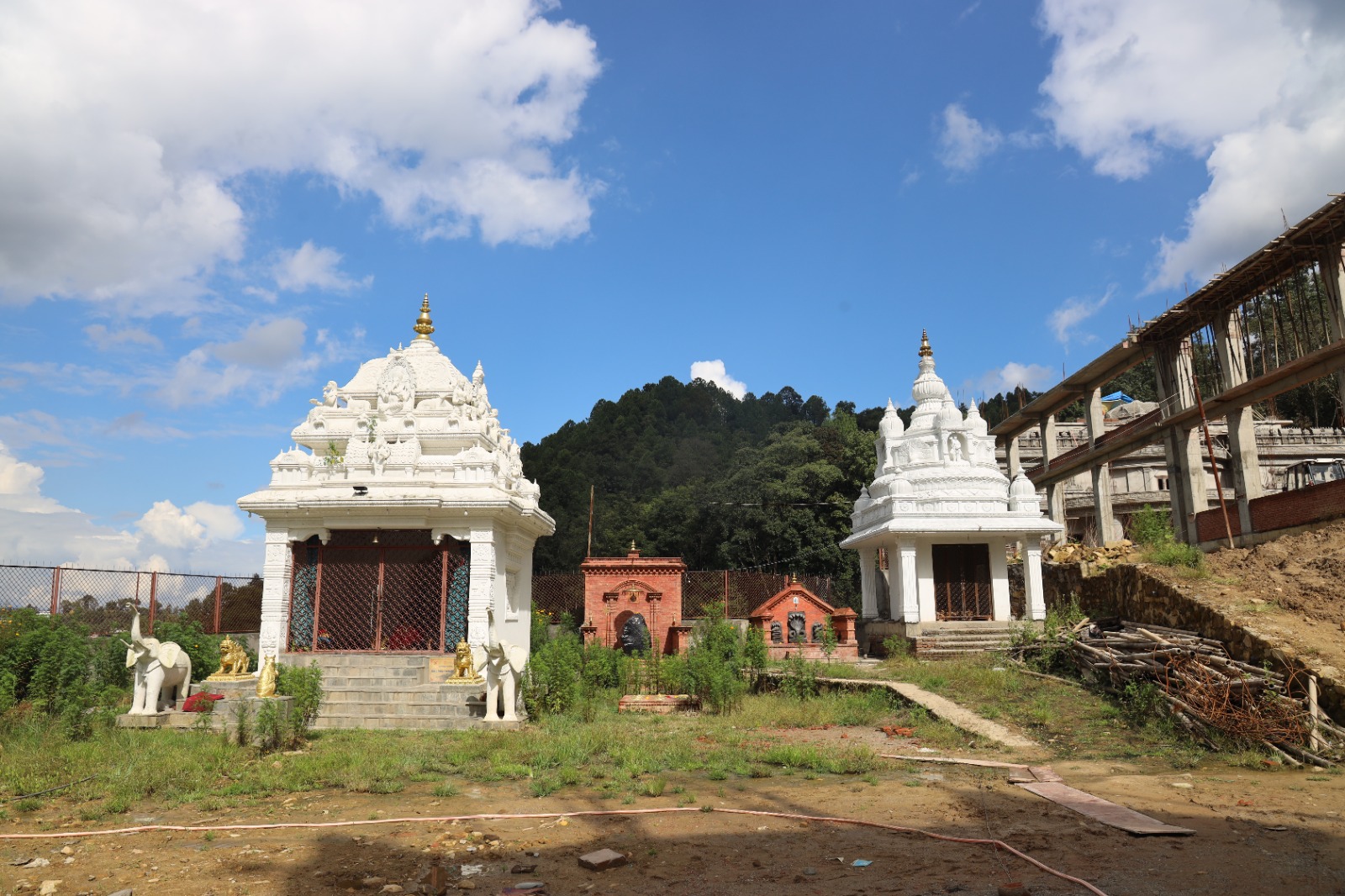
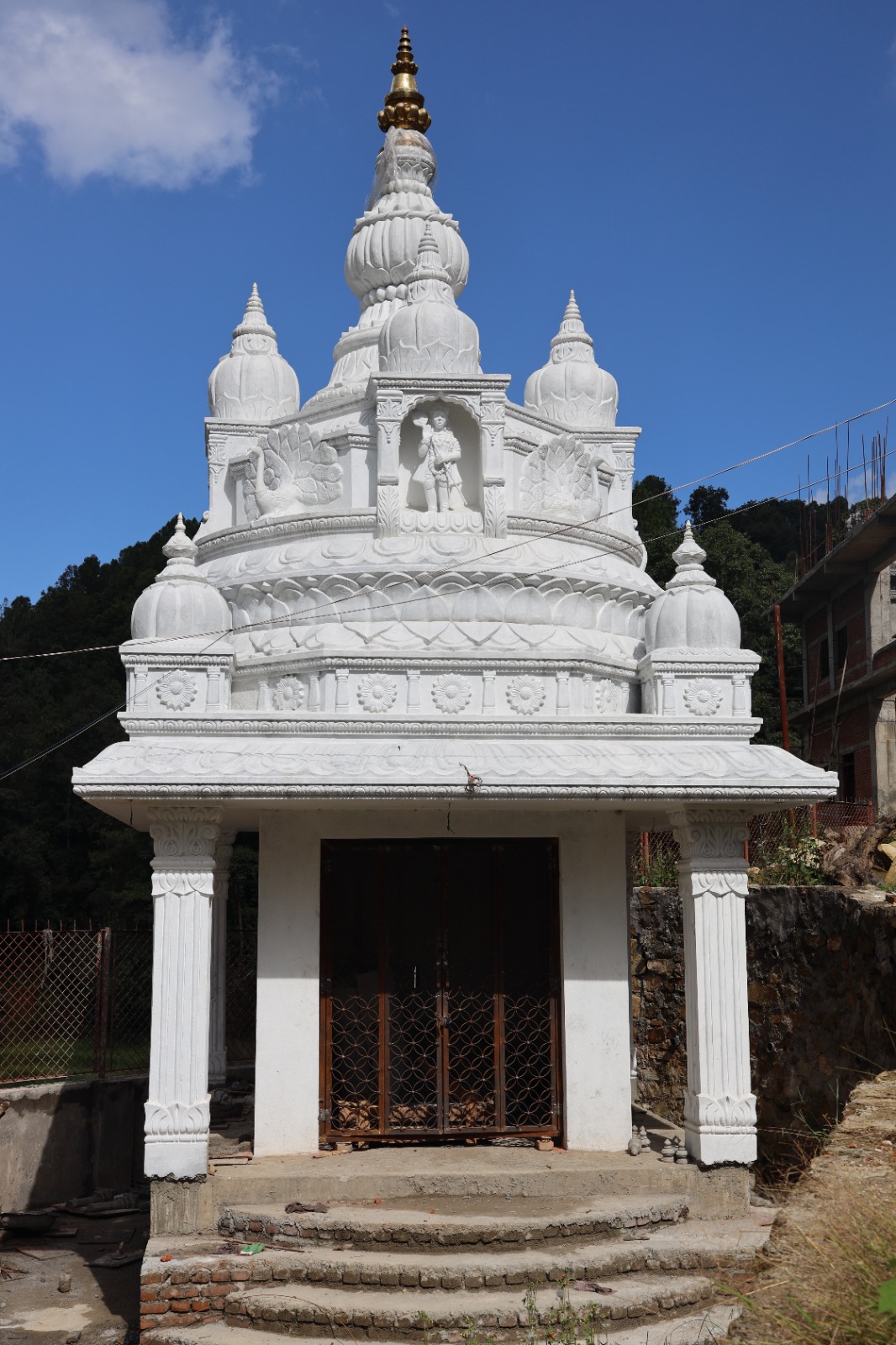
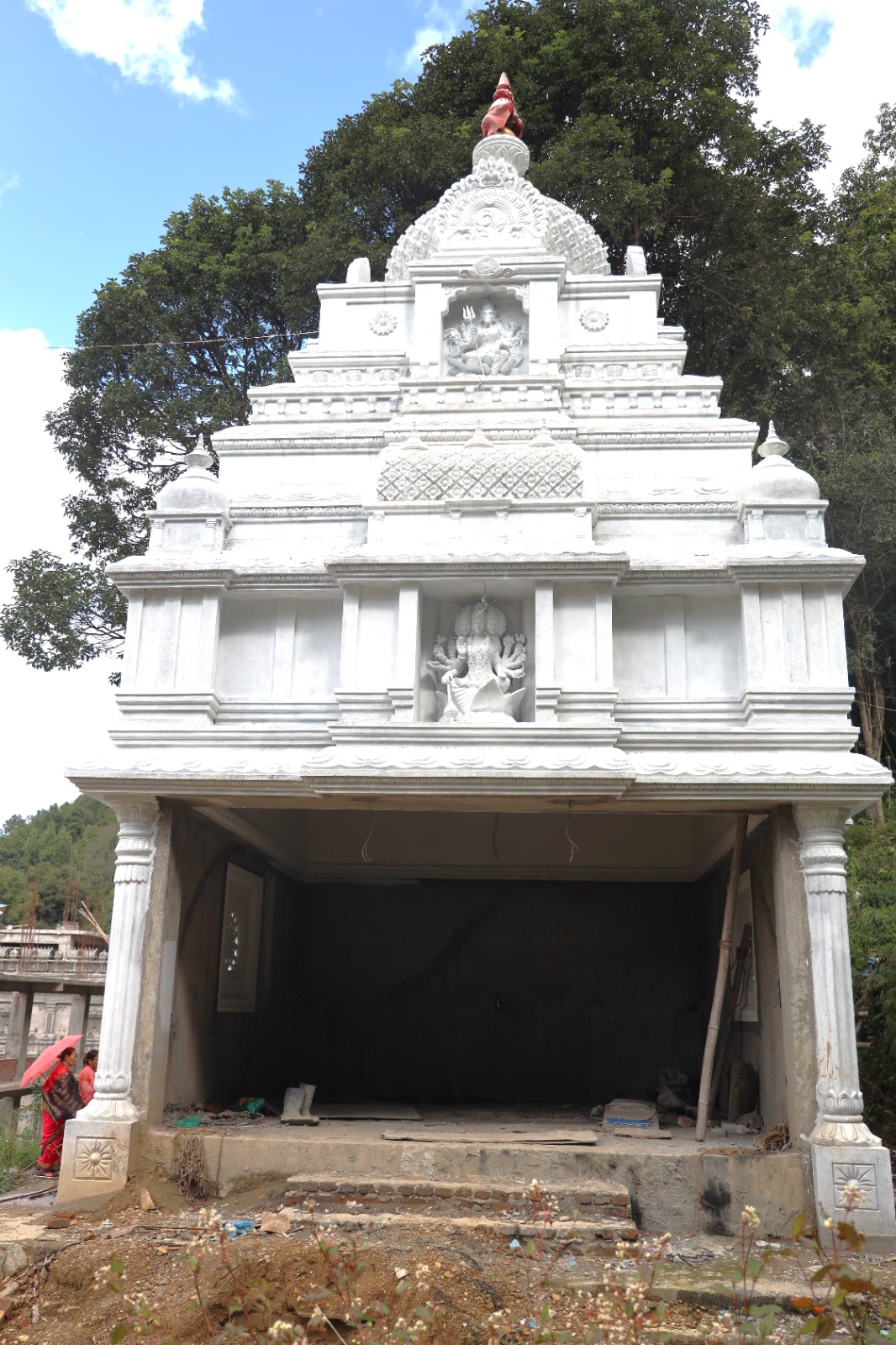
Thanks to the generous contributions of devotees worldwide, this ambitious project has advanced steadily. Several temples — Ganesh Temple, Naag Temple, Hanuman Temple, Kumar Temple, Gayatri Mata Temple, Navgraha Temple, Kshetrapal Temple — have already been completed. The inauguration and pranpratishtha of the Lord Ganesh, Naag devta, and Navgraha temples took place on 14 April 2024. In the remaining temples, the installation of idols and the performance of pran-pratishtha rituals are yet to be completed.
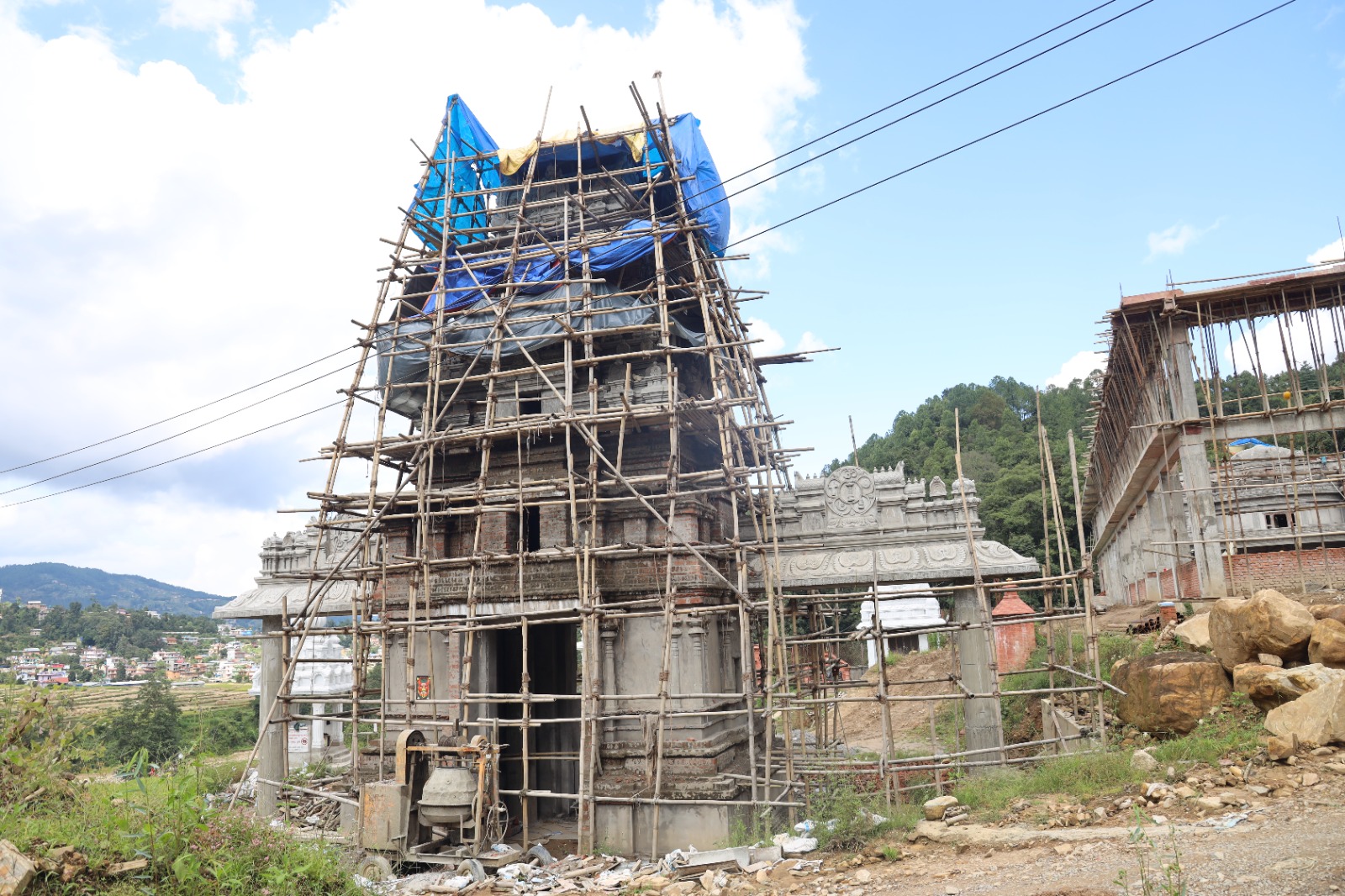
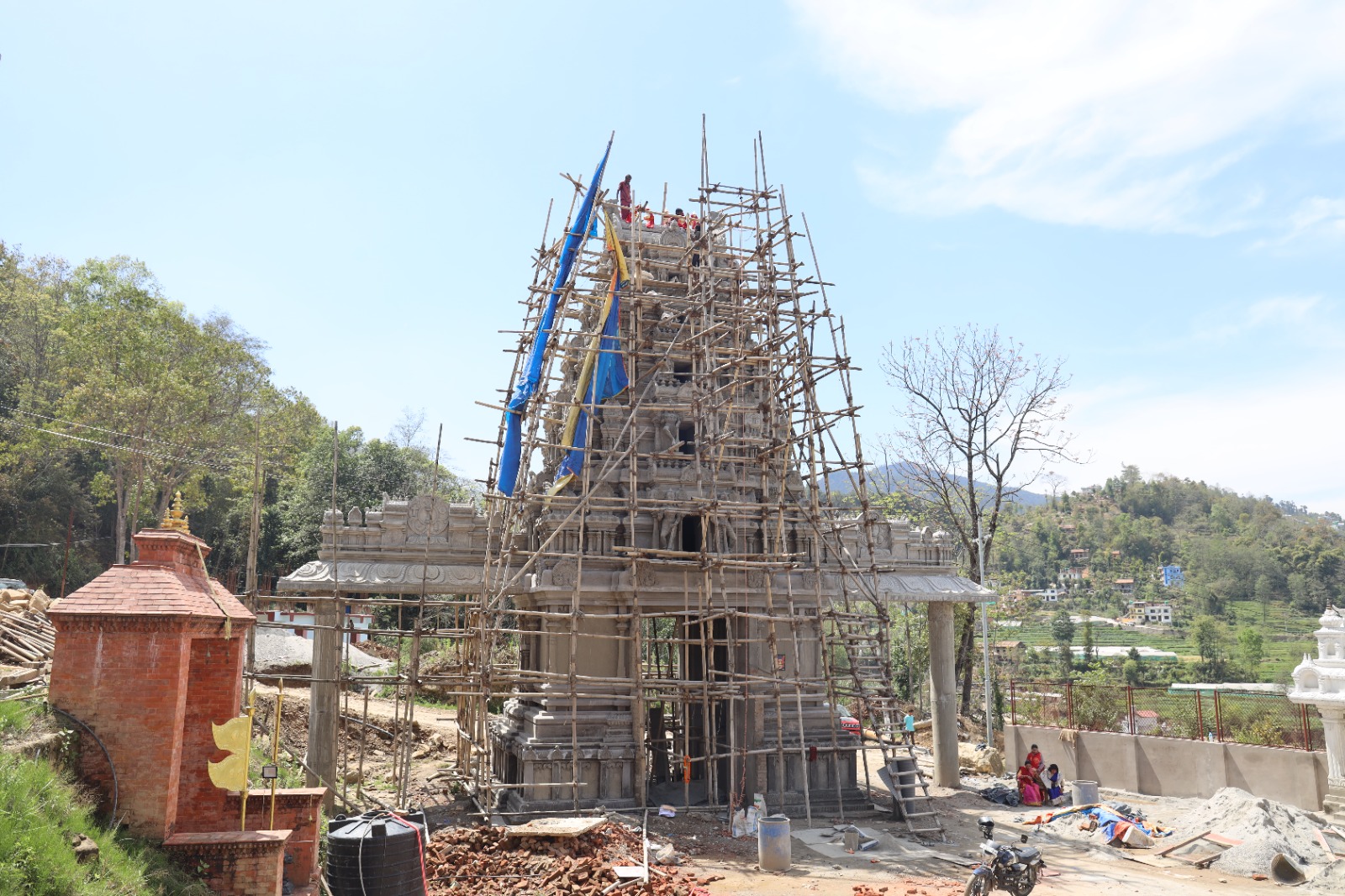
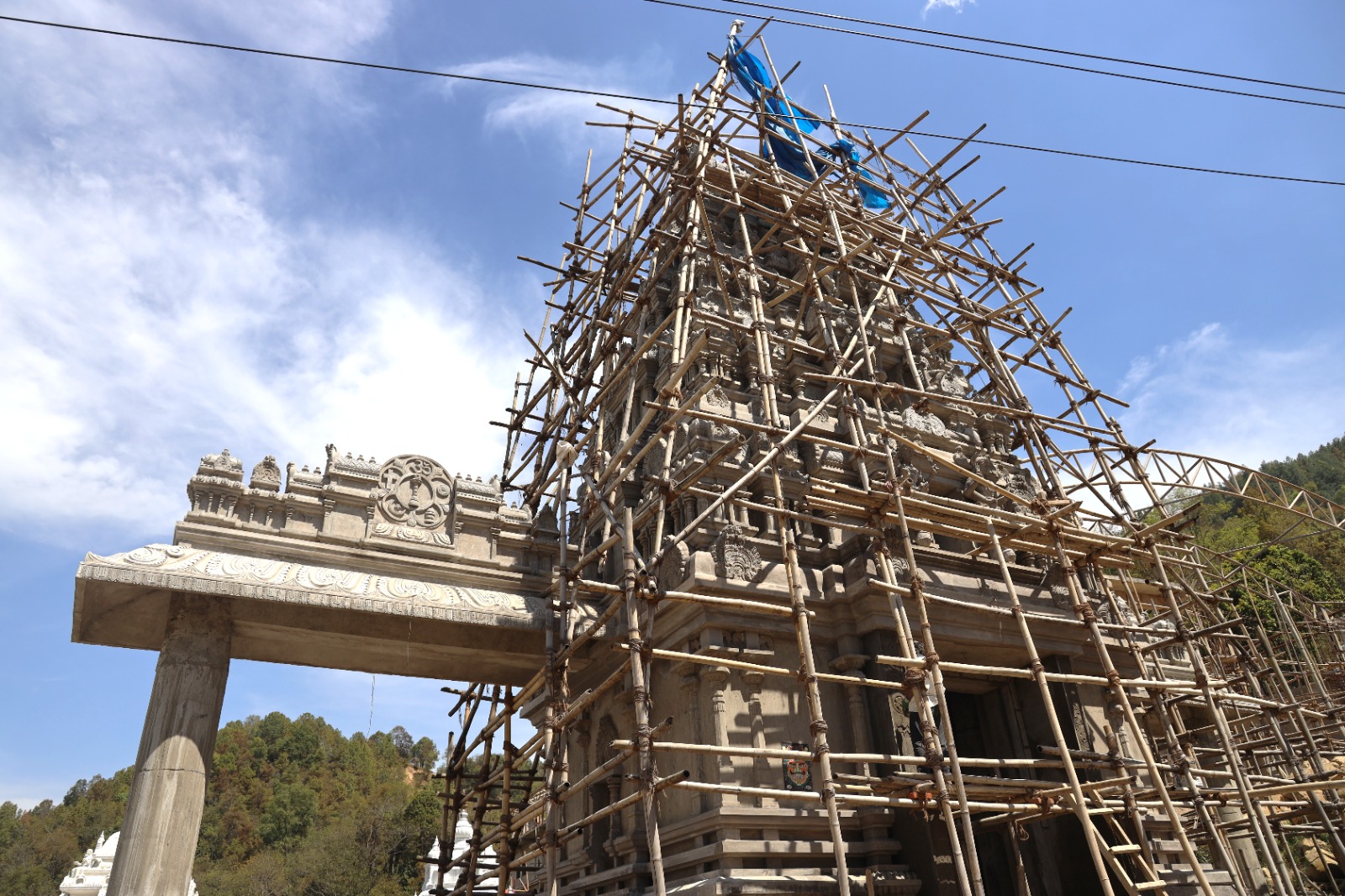
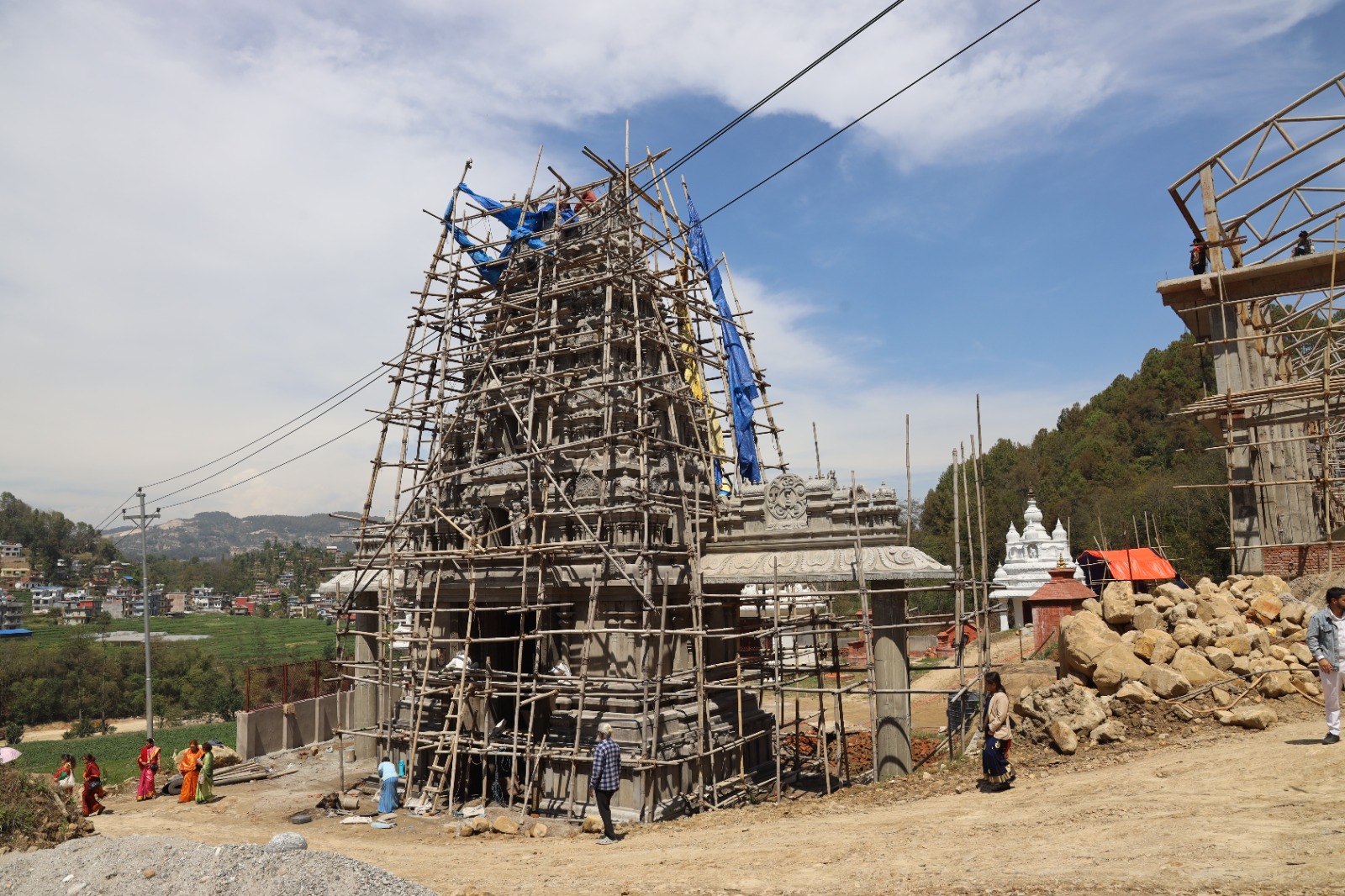
Another significant structure is the Shree Raja Rajeswari Gopuram Gate, rising to a height of 52 feet. It stands as the tallest among the very few gopurams constructed in Nepal. Recently, its construction was completed with the installation of pinnacles amid sacred rituals. The Gopuram blends artistic splendor with profound spiritual symbolism. In South Indian tradition, the Gopuram is a towering, ornate gateway marking the entrance to a temple, symbolizing the transition from the outer world to the sacred inner space.
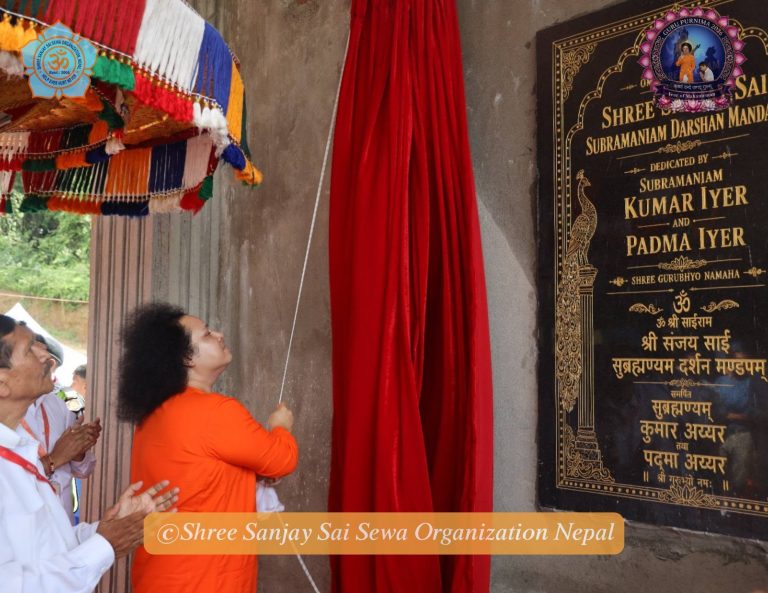
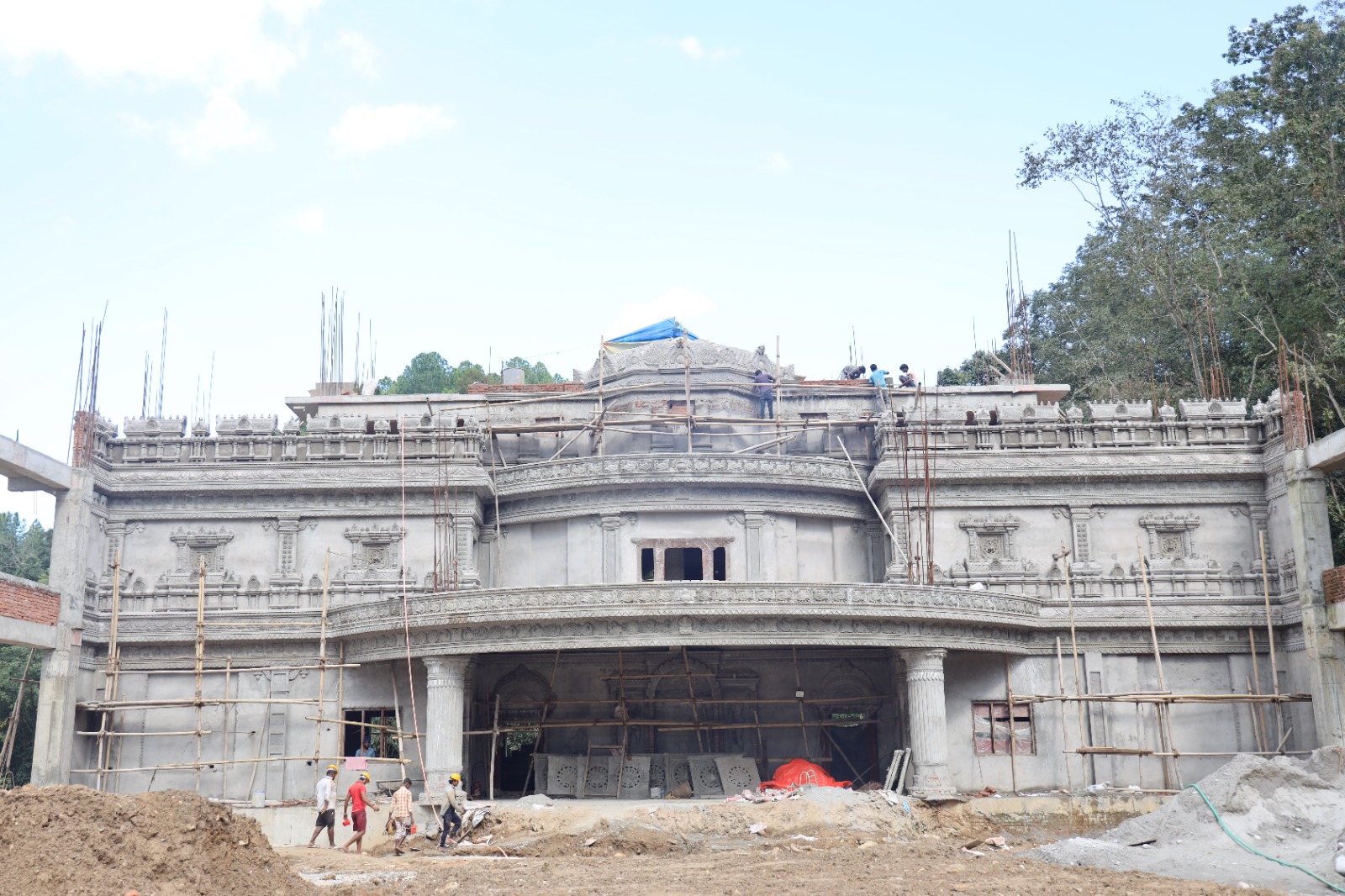
The construction of Swami’s residence has also been completed, with only finishing and interior work remaining. Approximately 70% of the Shree Sanjay Sai Subrahmanyam Darshan Mandap has been completed; once finished, it will accommodate 7,000 devotees. In addition, one story of the Bhakta Niwas has already been completed, providing facilities for visiting devotees.
Upcoming Sacred Events
A soft launch of the Shree Sanjay Sai Subrahmanyam Darshan Mandap is scheduled for Guru Purnima, 29 July 2026.
The full inauguration, accompanied by the grand celebration of Rama Rajyabhishekham–Pattabhishekham, is scheduled for Bhagawan Shree Sanjay Sai Baba’s 39th birthday in January 2027.